Vocabulary Development for Kids

Vocabulary development for kids means learning word meanings, sounds, and uses. Children remember words by connecting each one to an idea, hearing it in context, using it, and retrieving it later. This guide offers families an age-based routine for ages 4–15, with activities and progress tracking. Multilingual children can connect English labels and patterns to existing knowledge.
📥 First Vocabulary Phrase Groups for Kids
Printable word-and-phrase cards for building useful everyday English vocabulary.
Leave your email — we'll send the PDF to your inbox.No spam — the PDF plus one short reminder. Unsubscribe anytime.
What Families Need to Know
Vocabulary development for kids succeeds when words serve a purpose. A child will remember “pour” while helping with a drink more readily than while copying a list. Meaning, sound, action, and context reinforce one another. Pictures or translations introduce a word; speech and practice strengthen it.
Learning a word takes repeated contact. Your child may recognise “enormous” in a story but not use it. Later, they may say “a big whale” before recalling the precise word. Recognition often precedes confident use, so pauses and imperfect answers do not signal loss.
A multilingual child may understand a complex idea without knowing its English label. Build on that knowledge: “You know this animal. In English, it is a hedgehog.” Add a partner or sentence: “a small hedgehog” or “The hedgehog curls up.” This respects every language the child speaks.
A Simple Home Routine
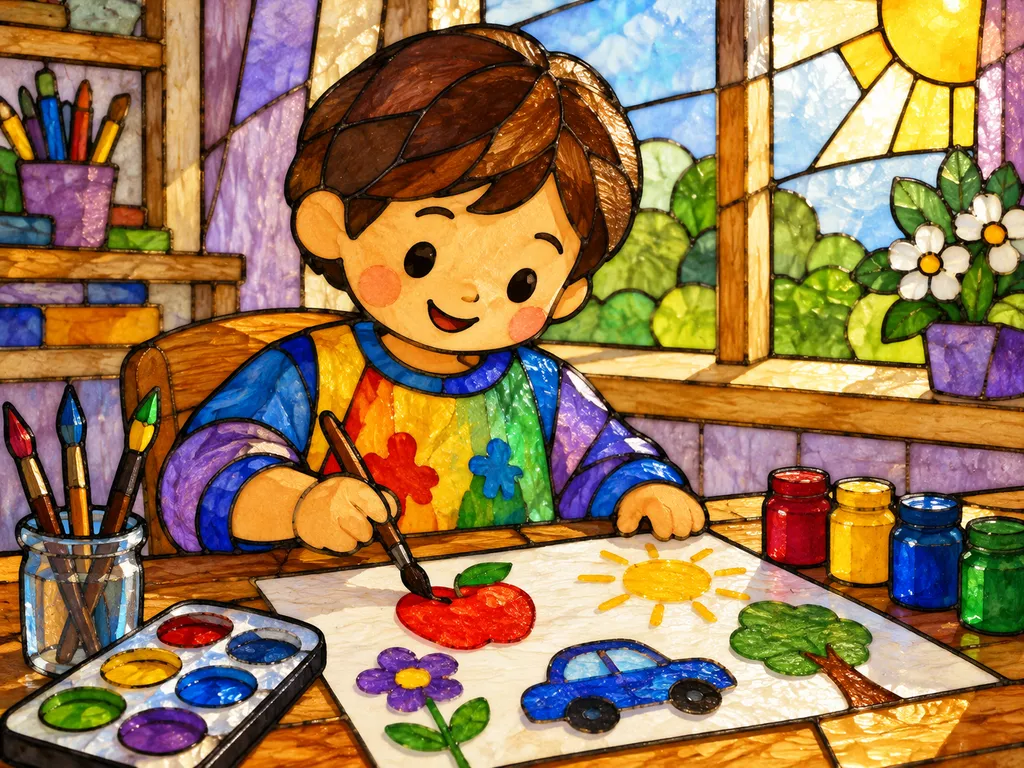
For vocabulary development for kids, short, repeated practice beats one long session. Choose three to five words linked to breakfast, the park, or a book. Say each word, demonstrate its meaning, and use it in a sentence. Ask your child to point, choose, act, or answer before requiring speech.
Revisit the words after a break. At breakfast, ask, “Which cup is empty?” Later, say, “Please fill the bottle.” Another day, contrast “full” and “empty” with two containers. Changing the context prompts retrieval instead of repetition.
Finish with one successful use. Younger children might name a picture or complete “The cup is…”. Older children can explain a choice, compare objects, or write a message with the new words. Stop while attention remains fresh. Practice should feel like shared talk, not homework.
Examples by Age
Age shapes the task; interests, English level, learning needs, and prior knowledge determine support. Treat these bands as starting points, then adapt the prompt or sentence while keeping the central idea.
Effective vocabulary development for kids follows readiness, not rigid age labels. A seven-year-old who loves space may enjoy “orbit” and “surface,” while an older beginner may need words for clothes, food, or school routines. Keep the idea engaging and adapt the sentence, prompt, or support.
Practical Activities That Make Words Stick
Sort words that share a theme. Group toy food, picture cards, or written words as fruit and vegetables, indoor and outdoor, or calm and noisy. Ask your child to explain one choice; the answer reveals their understanding.
Six Word Cards for Active Practice
Read each word, demonstrate the example, then ask your child to create another sentence.
This glass is fragile.
The sturdy box held the books.
A light drizzle wet the path.
I notice a crack in the shell.
Can you predict what happens next?
She carried the bowl carefully.
Games should test meaning, not speed. Describe an unnamed object, give a two-step instruction, change one word in a familiar sentence, or find an odd item in a group. This vocabulary development for kids combines listening, recall, and speaking in one task.
Try the Three-clue Challenge
Choose a familiar word and give three clues: its group, one feature, and one action or use. For “umbrella,” say, “It is something we carry. It opens. It keeps rain off us.” Let your child guess, then swap roles. Older children can hide obvious clues or place a new word in the final clue.
Before a story, choose a few plot-related words and explain them briefly. Notice each word in the text. Afterwards, ask your child to retell one event with those words. Avoid explaining every unfamiliar term; frequent interruptions disrupt meaning and enjoyment.
How to Check Progress Without a Test
To monitor vocabulary development for kids, watch how usage changes. Can your child recognise the word in a new sentence, explain it through an example, choose its opposite, or use it in conversation? These tasks reveal more than reciting a recent definition.
Keep a weekly note with three labels: “recognises,” “uses with help,” and “uses alone.” Add one example, such as “used ‘careful’ while carrying a glass.” Move words between labels when needed. Retrieval can weaken and return as time and context change.
Review the notes after a few weeks. If words remain at recognition, introduce fewer items and create more speaking opportunities. If your child uses them independently, add richer word partners, new meanings, or longer sentences. In one-to-one lessons, our tutors can apply the same observations to choose the level and pace.
- Notice five new words your six-year-old uses during one picture-book reading.
- Ask your child to retell one page using three recently learned words.
- Record a sixty-second story today, then compare vocabulary again next Friday.
- Play a sorting game with ten word cards and observe confident choices.
- Track Vocabulary Development for Kids weekly by noting spontaneous words in conversation.
When a word has several meanings or pronunciations, Cambridge Dictionary is a useful check before turning it into child-friendly examples.
Frequently Asked Questions
How Many New Words Should My Child Learn at One Time?
Start with a small set encountered repeatedly in meaningful situations. Three to five words may suit a short home routine; the right number depends on age, English level, attention, and familiarity with the subject. For vocabulary development for kids, repeated use matters more than a large list. Add words after your child recognises and uses the current set with less support.
Should I Translate New English Words?
Translation provides a quick, accurate bridge when an idea is abstract or known in another language. Follow it with an image, action, example, or English sentence, giving the word its own network of meaning. The family’s other languages can help your child compare meanings and spot differences between words.
What If My Child Understands a Word but Does Not Say It?
Understanding often develops before confident speech. Offer choices, sentence starters, gestures, or extra waiting time. Instead of “What does exhausted mean?”, ask, “After a long walk, are you excited or exhausted?” Model a full sentence for your child to adapt. Confirm the intended meaning before correcting one sentence detail.
Do Flashcards Help Children Build Vocabulary?
Flashcards support quick recognition but should not become the whole lesson. Turn each card into a task: sort it, describe it, match it to an action, use it in a sentence, or connect it to an object. Change the review order across days. If your child names a picture but misses the word in conversation, add listening and contextual practice.
- Start with three to five useful words from one familiar setting.
- Practice each word through listening, action, and a new sentence.
- Track whether your child recognises, uses with help, or uses each word alone.
A short one-to-one lesson can show what level and pace fit your child — book a trial English lesson.
Stay updated on our latest tips and resources by following us on Instagram LearnLink.